Strategic Alerts: How Notification Timing Influences NBA and NFL Bet Placements on Mobile Devices
Quinn Perry · Jun 10, 2026
Strategic Alerts: How Notification Timing Influences NBA and NFL Bet Placements on Mobile Devices
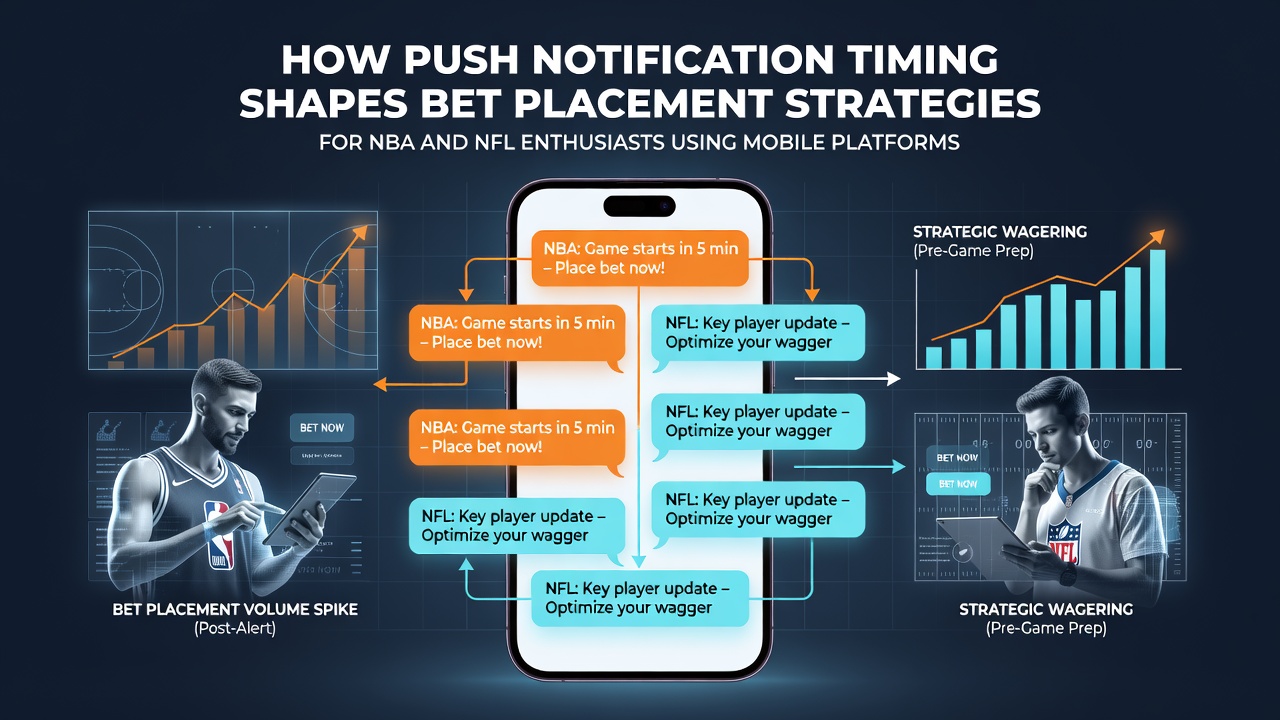
Push notifications serve as direct channels between betting platforms and users who engage with NBA and NFL events through mobile applications, and their delivery windows often determine when bettors finalize wagers. Research from industry analysts shows that alerts arriving minutes before key game moments such as tip-offs or kickoffs correlate with higher placement rates for live bets compared to those sent hours earlier. Observers note that mobile users frequently respond to these cues during commutes or breaks, which aligns bet activity with real-time developments in professional leagues.
Patterns in Notification Delivery Across League Schedules
NBA contests feature rapid scoring shifts and frequent timeouts that create multiple entry points for in-game wagers, whereas NFL matchups unfold in structured quarters with longer pauses between plays. Data indicates that platforms sending notifications 15 to 30 minutes before these transitions see increased activity in player props and point spreads, because bettors gain enough lead time to review updated odds without missing windows. Studies conducted through 2025 reveal that alerts timed too early lose relevance once line movements occur, while those arriving too late reduce decision windows for users on smaller screens.
Those who track user behavior across apps report that evening games in both leagues draw the densest notification responses, particularly when teams enter the fourth quarter or final period. June 2026 figures from mobile analytics firms confirm that NBA playoff notifications outperformed regular-season ones by measurable margins in click-through rates, because postseason stakes amplify urgency around foul trouble and injury reports.
Mobile Platform Mechanics and User Response Windows
Application interfaces on iOS and Android devices display notifications with varying prominence depending on user settings and operating system versions, which affects how quickly bettors open the app and review markets. Evidence suggests that concise messages highlighting specific odds changes generate faster responses than generic game reminders, since they connect directly to active decision points. Bettors often maintain multiple apps open during live events, so the first notification received can steer initial placement toward one platform over competitors.
Geolocation features integrated into these apps further refine timing by delivering alerts only when users enter stadium vicinities or designated betting zones, according to reports from the Nevada Gaming Control Board. Such targeted delivery reduces notification fatigue while concentrating wagers around venue-specific promotions during away games broadcast nationally.
Comparative Timing Effects in NBA Versus NFL Contexts
Fast-paced NBA quarters reward notifications that precede substitution patterns or three-point barrages, allowing bettors to adjust totals before momentum shifts register in live lines. NFL enthusiasts, by contrast, benefit from alerts spaced around commercial breaks and injury timeouts, because these intervals provide space to evaluate defensive adjustments and weather impacts. Figures released by the American Gaming Association demonstrate that live bet volume in NFL markets spikes when notifications coincide with two-minute warnings, whereas NBA volumes rise steadily throughout each period when alerts follow scoring bursts.
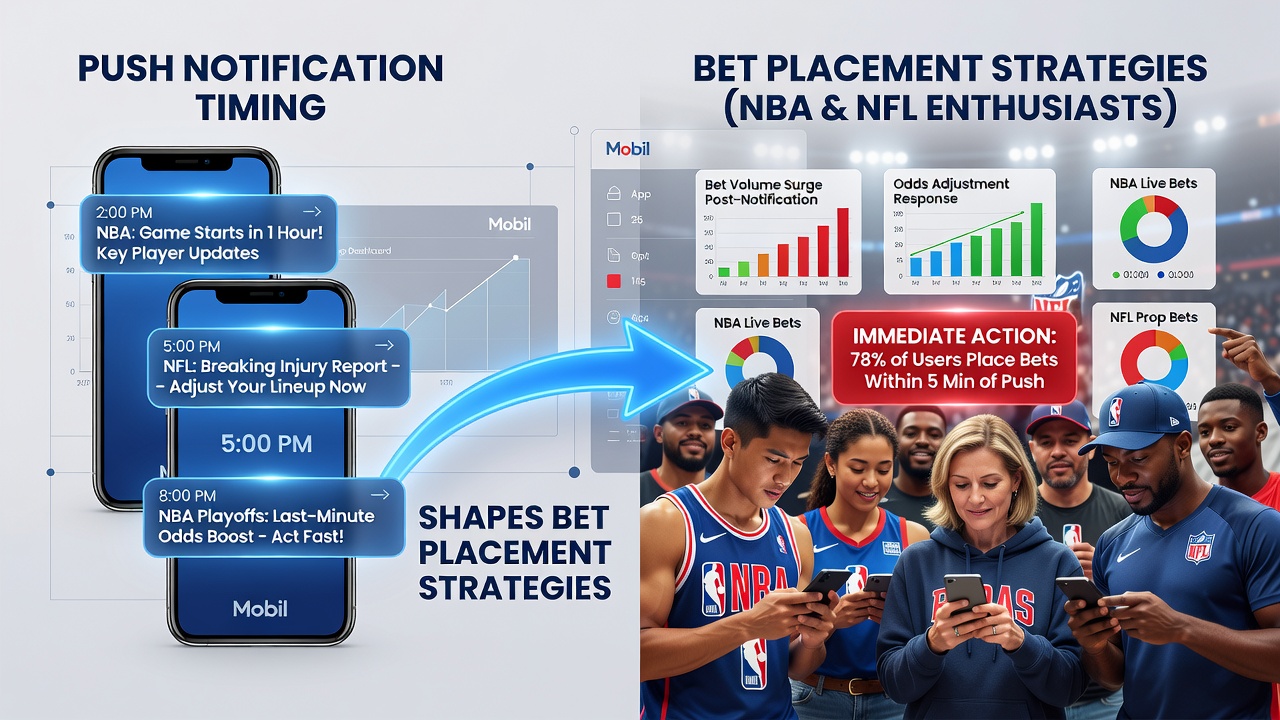
Platforms that segment their notification schedules by league therefore achieve steadier engagement, because the underlying game rhythms differ enough to require distinct pacing. One analysis of app telemetry showed that users receiving league-specific sequences placed 20 percent more wagers per session than those exposed to uniform timing across sports.
Integration with Broader Betting Ecosystem Factors
Notification timing intersects with deposit speed and odds accuracy, since bettors who receive alerts while funds are already available in their accounts complete placements more readily than those who must pause to transfer money. Research indicates that seamless integration between alert systems and wallet features minimizes drop-off rates during high-stakes NBA and NFL moments. External regulatory updates from bodies such as the Australian Communications and Media Authority have encouraged clearer disclosure of notification frequency to maintain user trust over extended seasons.
Case examples from major operators illustrate how pre-game alerts that reference weather data for outdoor NFL stadiums prompt earlier spread bets, while mid-game NBA notifications focused on foul accumulation steer activity toward player performance markets. These patterns hold across devices, although tablet users exhibit slightly longer response lags than smartphone holders due to screen size differences.
Conclusion
Push notification timing continues to shape bet placement rhythms for NBA and NFL participants who rely on mobile platforms, because delivery windows align user attention with evolving game conditions and market adjustments. Observers track these interactions through aggregated app data that reveals consistent preferences for alerts clustered around natural breaks and momentum shifts. As platforms refine segmentation and geolocation capabilities through mid-2026, the relationship between notification cadence and wager completion remains a measurable driver of engagement patterns across both leagues.