Seasonal League Cycles Shape Bettor Tool Preferences in Digital Wagering Ecosystems
Olivia Beck · Jun 29, 2026
Seasonal League Cycles Shape Bettor Tool Preferences in Digital Wagering Ecosystems
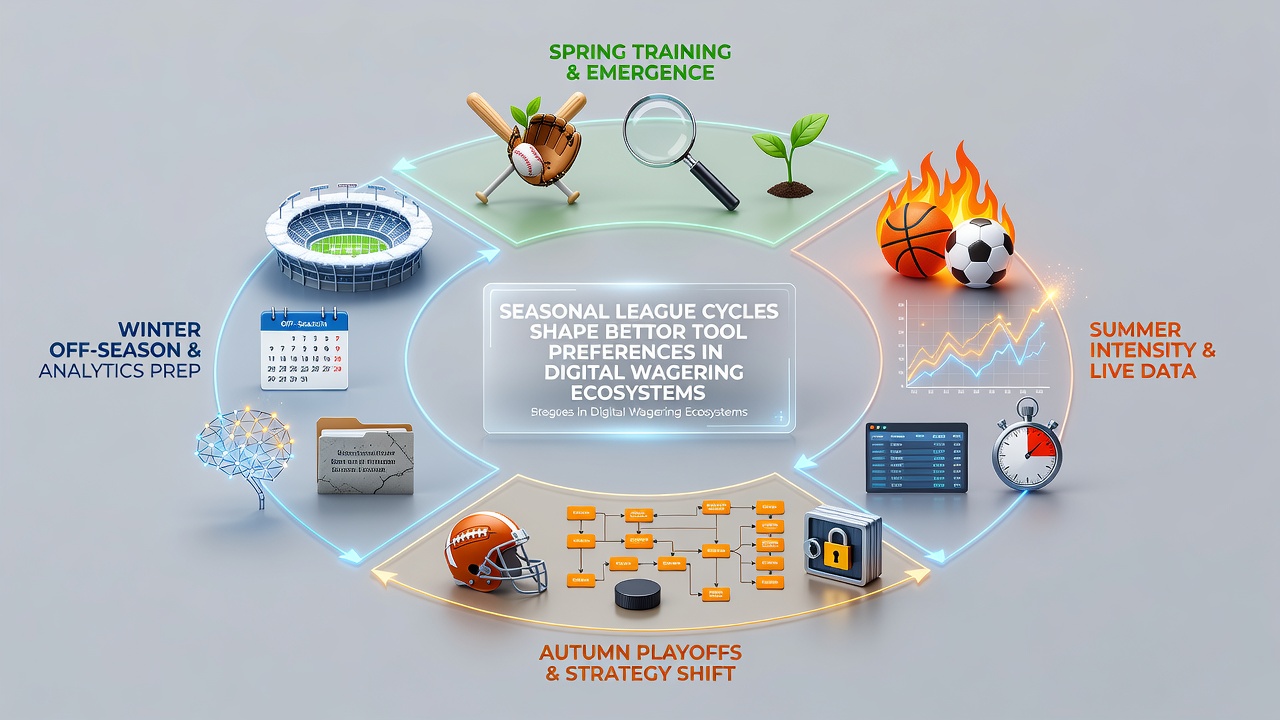
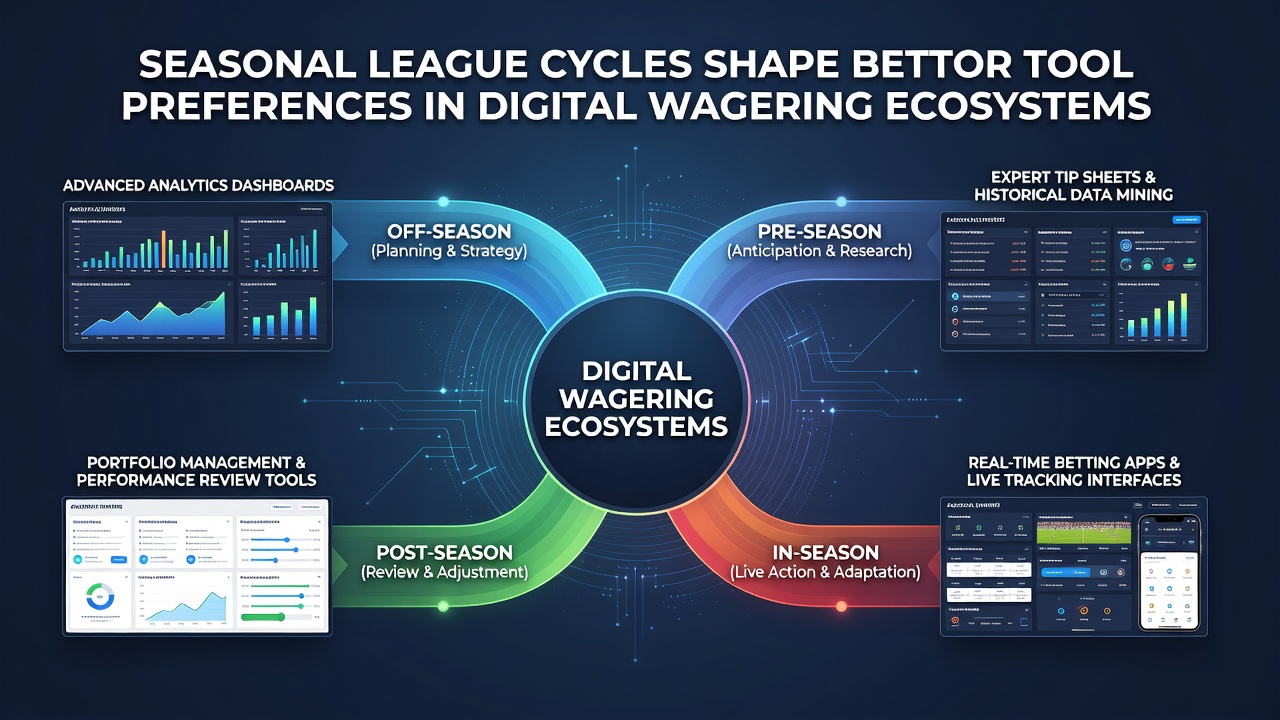
Professional sports leagues operate on predictable annual rhythms that directly influence the digital tools bettors select for placing wagers, managing funds, and tracking live markets. Researchers tracking platform usage patterns across multiple seasons note that preferences shift as events move from preseason preparation through peak competition and into postseason play. These cycles create measurable changes in how users interact with apps, select payment methods, and prioritize features such as real-time notifications or advanced analytics dashboards.
League Timelines Drive Distinct Usage Patterns
Data collected from major North American leagues shows clear transitions tied to calendar milestones. The National Football League schedule runs from early September through early January, with its championship game occurring in February, whereas the National Basketball Association stretches from late October into June with its finals extending into that month. Observers note that bettors adjust their preferred interfaces during these windows, favoring streamlined live-betting modules during high-frequency game periods and shifting toward detailed statistical tools during slower stretches or off-seasons. In June 2026, platform analytics revealed increased engagement with historical data visualization features once NBA finals concluded and attention turned toward summer leagues and international tournaments.
Payment and Funding Tool Shifts Across Seasons
Funding mechanisms also respond to seasonal demands. Bettors handling frequent in-game wagers during dense schedules often select instant-deposit options that integrate directly with mobile banking apps, while those preparing for longer-term series bets show higher adoption of scheduled transfer tools and multi-wallet setups. Figures released by the Canadian Centre on Substance Use and Addiction indicate that transaction volumes through e-wallet services rise sharply in months with overlapping league calendars, such as November when both football and basketball seasons run concurrently. These patterns hold across different user segments, including recreational participants and those managing larger bankrolls who coordinate funding around specific event clusters.
Feature Prioritization and App Navigation Trends
App layouts reflect these seasonal pressures as well. During concentrated playoff windows, users gravitate toward interfaces that minimize steps between deposit confirmation and live odds selection, whereas off-peak months see greater exploration of loyalty program dashboards and promotional tracking modules. One study released by the University of Nevada, Las Vegas International Gaming Institute documented that click-through rates on notification settings increase by measurable margins when multiple leagues approach their championship stages simultaneously. Bettors appear to configure alerts differently depending on whether they follow single-sport or multi-sport calendars, with configuration changes persisting into subsequent seasons.
Regional regulatory environments add another layer. Australian wagering operators report that bettors adjust their preferred verification and withdrawal timelines in line with local sporting calendars, which include distinct football codes and basketball competitions running on staggered schedules. Such adjustments align with broader platform trends observed in other markets where overlapping seasons create spikes in simultaneous event coverage.
Long-Term Habit Formation and Platform Loyalty
Repeated exposure to these cycles contributes to the formation of stable user behaviors. Bettors who experience consistent success with certain deposit flows during one season often retain those methods when new leagues begin. Platform developers have responded by embedding seasonal presets that automatically surface previously used tools at the start of each major campaign. Evidence from aggregated user session data demonstrates that retention rates improve when applications anticipate these recurring needs rather than requiring manual reconfiguration each time a new season launches.
Cross-league comparisons further illustrate the point. Markets centered on European football, which follows a late-summer to spring structure, exhibit their own distinct preference shifts that differ from North American patterns. Operators serving international audiences therefore maintain flexible toolkits that accommodate multiple calendar systems without forcing users into uniform workflows. This adaptability supports sustained engagement across time zones and sporting traditions.
Conclusion
Seasonal league cycles continue to function as primary drivers of tool selection within digital wagering ecosystems. Platform data consistently shows that bettors adapt their choices in funding methods, feature priorities, and notification settings in direct response to the timing and intensity of professional competitions. As leagues maintain their established calendars, these behavioral patterns are expected to persist, prompting ongoing refinements in how applications organize options around predictable annual rhythms.