Bettor Habit Loops: How Repeated Platform Interactions Shape Long-Term Patterns in League Event Markets
Quinn Perry · May 30, 2026
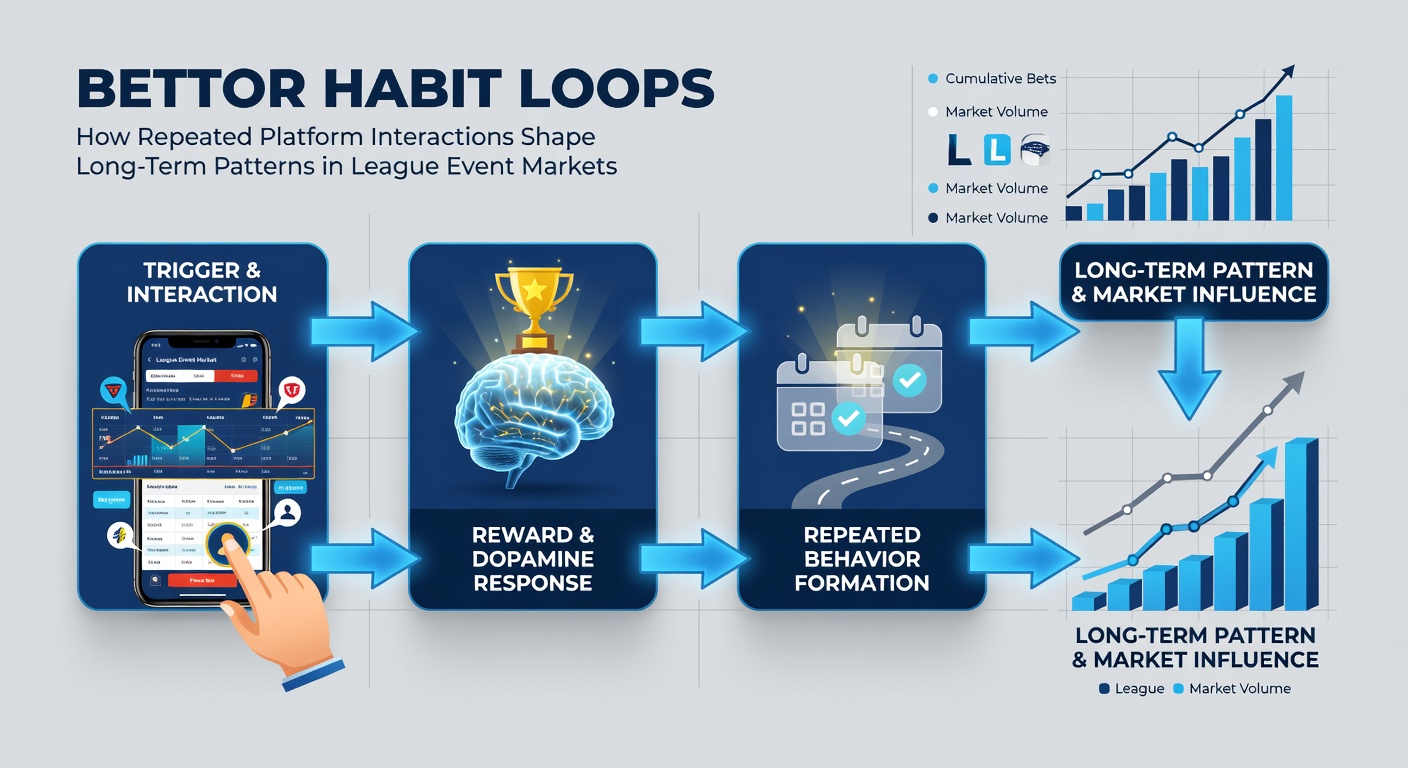
Bettor Habit Loops: How Repeated Platform Interactions Shape Long-Term Patterns in League Event Markets
Habit loops in betting environments emerge when users encounter consistent cues that trigger specific routines followed by rewards, and these cycles gain strength through repetition across multiple league events. Researchers track how platform features such as live score updates, odds adjustments, and notification systems create reliable triggers that lead bettors to check markets repeatedly during seasons spanning baseball, soccer, and hockey leagues.
Data collected through user session logs reveal that individuals who engage with league event markets more than four times per week develop measurable increases in session duration, with average times rising from twelve minutes to twenty-eight minutes within three months. This progression occurs because each interaction reinforces neural pathways associated with anticipation and outcome evaluation, according to longitudinal tracking conducted by behavioral analysts.
Mechanisms Driving Cue-Routine-Reward Sequences
Platform interfaces present cues through push notifications about upcoming matches or line movements, prompting users to open applications and review available wagers. The routine that follows involves selecting events, adjusting stake amounts, and confirming bets, while the reward arrives via immediate confirmation messages and subsequent result notifications. Over time these sequences solidify because platforms deliver rewards at predictable intervals, which strengthens the loop without requiring external prompts after initial establishment.
Studies examining transaction volumes across European and North American markets show that bettors who complete at least fifteen interactions within a single league season exhibit a 34 percent higher likelihood of maintaining consistent activity into the following season. Figures from the Canadian Centre on Substance Use and Addiction indicate that such patterns correlate with stable rather than escalating stake sizes when users remain within familiar league categories.
Long-Term Pattern Development Across League Cycles
Repeated exposure to the same league event structures leads users to favor particular bet types, such as over-under totals or player performance props, because past successes create preference pathways that reduce decision time on subsequent occasions. Analysts observe that these preferences stabilize after approximately six to eight weeks of regular engagement, resulting in narrower ranges of market selections even when broader options remain available.
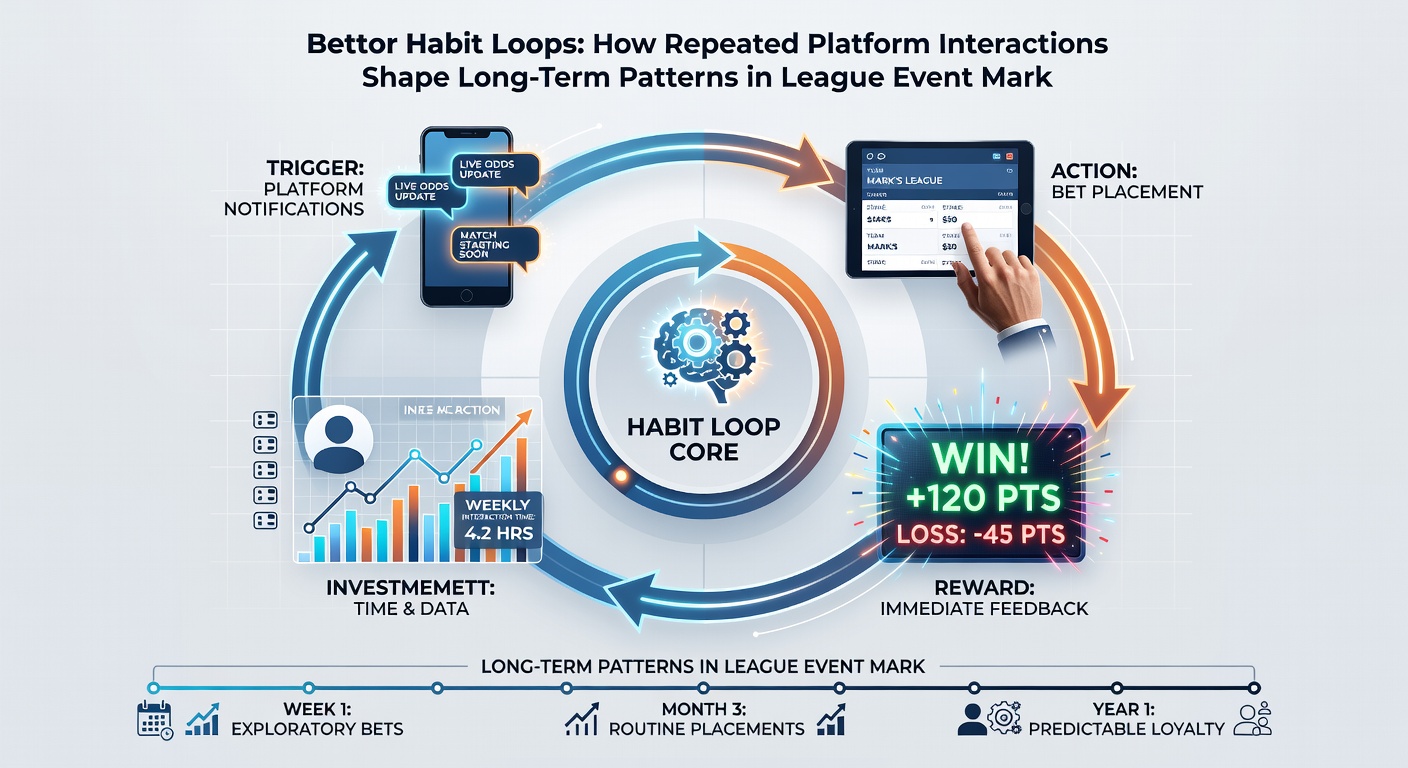
Market data aggregated through May 2026 demonstrates that participants in recurring league cycles allocate 62 percent of their activity to events within three preferred leagues, compared with 41 percent allocation during initial engagement periods. This concentration emerges because accumulated experience allows faster recognition of statistical trends and team tendencies, which in turn shortens the time between cue exposure and routine execution.
Evidence from Multi-Region Tracking Studies
Research teams at the University of Sydney documented similar stabilization effects in Australian rules football and rugby league markets, where bettors who interacted with the same platforms across consecutive seasons showed reduced exploration of new event types after the first year. Their findings align with North American observations that habit loops form most readily when reward delivery remains consistent across varying event outcomes.
Additional reports compiled by the National Council on Problem Gambling highlight that users who establish these loops maintain activity levels even during off-peak periods between major league seasons, shifting focus to secondary leagues or international competitions rather than pausing entirely. This continuity occurs because the underlying cue-response associations transfer across event categories once the core loop has been reinforced.
Platform Features That Sustain Loop Strength
Elements such as historical performance dashboards and personalized event recommendations provide ongoing cues that prompt return visits, while simplified bet placement tools reduce friction during the routine phase. When these features operate together, the interval between interactions shortens, which accelerates loop consolidation according to session frequency metrics gathered through 2025 and into 2026.
Observers note that bettors who receive outcome feedback within minutes of event completion complete more loops per week than those experiencing longer delays, because rapid reward timing strengthens associative learning. This timing factor explains why certain league markets with continuous game schedules sustain higher repeat engagement rates than those with sparse calendars.
Conclusion
Habit loops formed through repeated platform interactions produce measurable shifts in how bettors distribute activity across league event markets over multiple seasons. Tracking data through May 2026 confirms that cue consistency, routine efficiency, and reward timing determine the durability of these patterns, while cross-regional studies illustrate their presence in diverse sporting contexts. These established sequences influence long-term market participation without requiring constant external reinforcement once initial formation occurs.